Email Segmentation: Criteria, Personalization, and Automation

Generic, impersonal emails with identical messages for all subscribers are increasingly giving way to hyper-personalized emails tailored to recipients' interests and needs. One way to achieve this personalization is to segment your audience into groups with similar characteristics and tailor content to each group. In this article, we'll explore the key parameters and benefits of segmentation, share email best practices, and discuss automation and tools for personalized emails.
What Email Segmentation Really Means
Email segmentation is a marketing technique that helps distribute contacts from a single database into multiple groups based on a range of criteria. Its purpose is to improve email targeting through enhanced personalization.
Contact grouping enables sending personalized emails to different target audiences, helping marketers design campaigns that directly match their subscribers' exact needs.
Beyond personalization, this method provides valuable insights needed to tailor email design, content, and other components to a specific audience segment.
Segmentation provides email marketing with a number of benefits:
- Improving campaign effectiveness. Segmented campaigns often achieve higher opens, clicks, and conversions than non-segmented sends, although results depend on data quality, offer relevance, and audience engagement.
- Improved deliverability. Effective segmentation can support sender reputation by making emails more relevant and reducing spam complaints, but it should be combined with list hygiene, email authentication, and bounce and complaint monitoring. Recipients are more likely to mark irrelevant emails as spam or unsubscribe from mailing lists. Personalized campaigns, on the other hand, typically produce positive results.
- Targeted offers. Segmentation allows businesses to target different customer groups with the most relevant advertising offers and promotions. This technique helps direct campaigns to more interested or loyal audiences, which can improve campaign ROI.
- More accurate analytics. Segmented emails perform more effectively and provide useful data on the loyalty and value of audiences for a specific campaign or the brand as a whole. This data can be used to generate data-driven insights for optimizing email marketing strategies.
- Improving the customer experience. Segmentation allows you to make your newsletters more meaningful and relevant, delivering only the information that's interesting or useful to subscribers. By regularly delivering relevant content to your customers, you'll build their trust and loyalty.
- Campaign optimization and automation. Audience grouping improves the effectiveness of trigger-based campaigns and other automated emails: welcome series, onboarding or re-engagement emails, post-purchase follow-ups, etc.
- Effective personalization. Segmentation makes it easier to personalize emails efficiently, even at scale. Marketers can more accurately select subject lines, tone, and style, adjust sending frequency, create relevant product recommendations, and more.
Core Segmentation Criteria That Matter
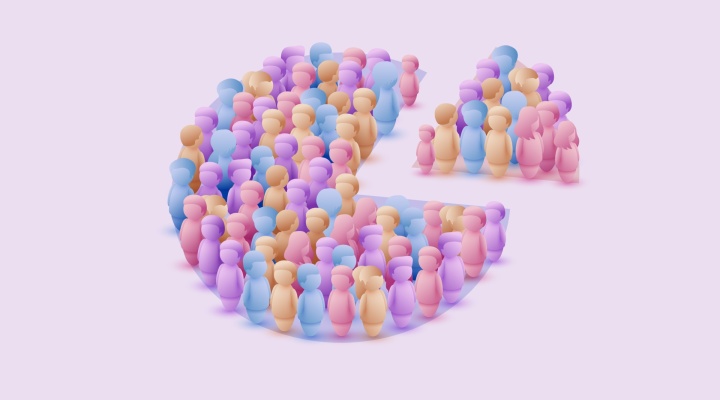
To build high-converting personalization strategies, you must look beyond basic subscriber interests and analyze broader audience characteristics. Age and location, brand interaction history, customer journey stage, and other characteristics help create segments and tailor emails to the needs of each group.
Email segmentation can be based on several key criteria:
- Demographics. Subscribers can be grouped by age, gender, language, socioeconomic status, income level, and occupation, provided these attributes are relevant to the campaign and the data is collected and processed lawfully.
- Geographic. This criterion is often used when preparing segmented email campaigns. It helps group subscribers by location using parameters such as country, region, town, postal code, time zone, season, and climate zone.
- Customer journey. Segmenting prospects by their stage in the customer journey proves highly effective. By filtering audiences according to this milestone, marketers can send them tailored messages that match their exact buying readiness. For example, welcome and onboarding emails for new subscribers, product recommendations after their first purchase, newsletters with discounts and bonuses for loyal customers, etc.
- Behavioral. Behavioral email segmentation allows you to target your audience based on available data about various interactions with your product or brand. The most commonly used attributes include purchase history, website or app visit history, previous opens and link clicks, product views and cart additions, file downloads, event participation, company inquiries, and more.
- Psychographics. Subscribers are often sorted based on their interests, views, values, and lifestyle. Particular attention is paid to their needs and problems (pain points). This helps provide the most interesting and useful content or relevant offers for a particular segment.
- Engagement level. By analyzing the metrics of previous email campaigns, you can segment your audience based on their level of engagement and interest in your product and brand. Subscribers are commonly divided into three groups: highly engaged, moderately engaged, and inactive. Contact grouping by this criterion allows you to tailor subsequent campaigns to each segment. For example, you can attract the attention of disengaged users with special offers or relevant surveys.
- Firmographic. This segmentation criterion is commonly used in B2B marketing. It includes attributes such as industry, company size, revenue, technology stack, job title and role within the company, etc.
Personalization Beyond First Name
Effective personalized email marketing involves more than just addressing subscribers by name. If you want your emails to match your audience's interests and needs, you need to leverage recipient data, tailor your message content, and consider the specifics of their interactions with your brand. Successful personalization involves several steps, including preparing contact data, segmenting your audience, adapting email content, and choosing the right sending times and frequency.
Prepare the data
Use email verification services to identify invalid addresses. Regularly update your database, remove invalid or unengaged contacts where appropriate, and honor unsubscribe requests promptly. Standardize subscriber information (names, email addresses, phone numbers, locations, etc.) for easier management.
Ensure that you collect and use subscriber data lawfully, obtain consent where required, and clearly explain how personal information is used for segmentation.
Segment your audience

Select the criteria and attributes from the previous section (demographics, geography, behavior, etc.) that are most relevant to your industry and marketing campaign objectives. Then analyze the contacts in your database and categorize them into key segments.
Adapt the content
Modern email marketing optimization tools can personalize not only the recipient's name but also other important components of content. Instead of generic broadcasts, top marketers adapt subject lines, body copy, CTAs, and product recommendations to each segment. For example, instead of a generic "Winter Collection," a segmented campaign might use "Freezing in Toronto? Warm up with 20% off coats." You can also adjust the language, tone, and style of your messages.
Add dynamic blocks and conditional logic
One advanced personalization technique is adding dynamic content blocks to emails that automatically adapt to the recipient's preferences. It's also a good idea to use conditional logic to customize email content based on subscriber actions.
These techniques can improve the relevance of campaigns for new, existing, or inactive customers. They help inform target audiences about promotions or events in a specific location and display different content to B2B and B2C segments.
Set the time and frequency of sending emails
Many marketing platforms offer functionality that allows you to customize the timing and frequency of email sending. By doing this, you can tailor sending times to your recipients' time zones.
You can also test optimal timing and frequency of email campaigns for different audience segments based on relevant criteria (engagement level, etc.). Modern ESPs (like Mailchimp or HubSpot) also offer AI-powered features to optimize send times, personalize content, and automatically test campaign variations.
Automation and Trigger-Based Emails
Personalized emails are more effective when they consider not only audience characteristics but also the context of their interactions with the brand. However, manually tracking changes in subscriber behavior and promptly adapting emails to them is difficult, especially with a large contact base. Email automation and personalization make it possible to manage this process consistently without constant manual intervention.
Automation makes it easier to scale personalized email campaigns without having to manage every message manually. It can improve relevance and engagement across welcome and onboarding series, behavioral follow-ups, abandoned cart and other action reminders, as well as re-engagement and post-purchase emails.
Automation allows you to send triggered emails based on subscriber actions or events, customer journey stages, engagement level, and other criteria. This considers audience data and preferences, optimal timing, and other parameters.
To successfully automate personalized campaigns and increase email marketing conversions, consider the following:
- Audience profiling. Marketing platforms can organize available demographic, geographic, and behavioral data into lead and customer profiles. The subscriber profiles they create help fine-tune the targeting of mass campaigns.
- Real-time segmentation. Marketing platforms can continuously update audience segments based on subscriber activity and available data.
- Triggered campaigns. Based on the data collected, platforms automatically send subscribers email sequences of various types and topics based on specific triggers. Common triggers include registration, form submission, an abandoned checkout, a file download, or reaching a usage threshold.
- Dynamic content. Some components of personalized newsletters are dynamically updated based on a specific subscriber's data or actions. These updates typically include the subscriber's name, product title, CTA, offers, recommendations, etc.
- Mailing list updates. Integration platforms like ApiX-Drive automate this process by transferring new leads from your CRM, web forms, or Facebook Lead Ads directly to your email marketing tool.
Bottom Line
Ultimately, audience segmentation remains one of the most effective ways to make email marketing more relevant and engaging. When combined with automation, it transforms generic broadcasts into a highly coordinated system of triggered messages. By tailoring content, timing, and offers to specific subscriber behaviors, businesses can improve conversion rates and build stronger customer loyalty.
Recommended reads:
- Gmail and Google Drive Integration: How to Save Attachments Automatically
- Automating Employee Onboarding: Practical Use Case for HR
- Tally and MailerLite Integration: Automatic Transfer of Leads
- Airtable and Mailchimp Integration: Automatic Creation of Contacts
- Top 7 Integrations: How to Automate Marketing Workflow