5 New Careers Created by the Rise of Agentic AI

Autonomous AI agents have shifted artificial intelligence from static text generation to goal-driven execution. As systems gain the ability to plan, reason, and operate external tools independently, organizations require specialized talent to design, govern, and optimize them. Exploring these AI career trends in 2026 reveals how the broader AI workforce transformation is creating demand for professionals skilled in Agentic AI.
AI Agent Architect
An AI agent architect is a specialist who designs the architecture and operating principles of agent systems based on artificial intelligence. Systems can consist of one or more AI agents, independently perform tasks, interact with each other, utilize external tools, and adapt to changing conditions.
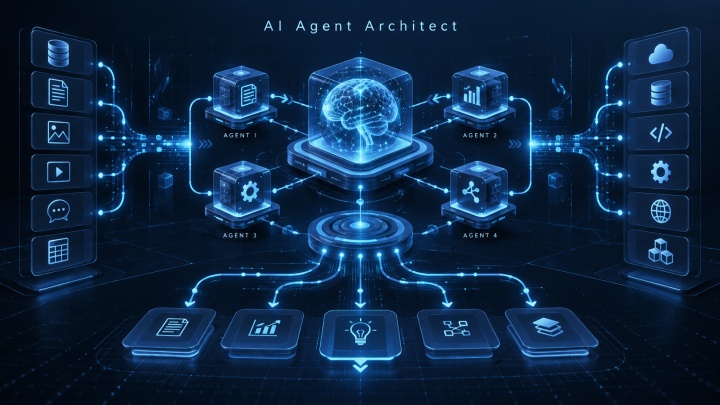
The scope of application for such solutions is quite broad today, as autonomous systems are being actively implemented in many areas of business and everyday life. Examples include agent-based solutions for customer support, sales and retail automation, workflow management, manufacturing operations management, financial analytics, and more.
Key responsibilities of AI agent architects:
- Multi-agent system design. Specialists develop systems involving multiple AI agents, create models of their interactions, assign roles and form hierarchies, devise task orchestration logic, manage agent memory and context, design fallback and recovery mechanisms, and more.
- Creating planning and reasoning systems. Developers are equipping AI systems with planning and reasoning skills, enabling them to understand goals, break problems down into tasks, select tools, adapt to changing conditions, and evaluate the results of their actions.
- Integration and orchestration. Architects connect autonomous systems to external applications via APIs and orchestrate them. This involves databases, CRM, cloud services, search engines, internal corporate systems, and automation tools.
- Selecting and optimizing AI models. Specialists select language models (LLMs) suitable for the systems they create. They evaluate models based on a number of criteria, test them on various tasks, compare LLMs based on accuracy, speed, and cost, manage inference pipelines, and perform fine-tuning and optimization.
- UI/UX design. Engineers design interfaces and shape the user experience of autonomous AI agents. They create conversational UX, control dashboards, feedback systems, develop multimodal interactions, and more.
Agentic Workflow Designer
An agentic workflow designer structures the process logic and operational boundaries for autonomous AI systems. Specializing in agentic workflow design at the intersection of UX, process engineering, and AI workflow automation, this role focuses on mapping how agents execute multi-step tasks across manufacturing, retail, finance, and software operations.
Key responsibilities of agent workflow designers:
- Creating processes for AI agents and agent systems. Engineers develop the logic and mechanisms for interaction between agents, establish dependencies and task sequences, create decision trees and mechanisms for distributing tasks between AI and humans.
- Managing agent behavior. Agentic workflow designers shape the behavioral logic and coordination of autonomous systems. These specialists establish system roles, permissions, and restrictions, manage the transfer of context from humans to AI units and between them, and set triggers, execution conditions, and retry and recovery logic.
- Workflow logic creation and state management. The AI agent workflow designer's responsibilities include developing workflow states, managing long-running tasks, preserving memory and context, defining process checkpoints, and more.
- Prompt and instruction development. AI process engineers configure AI workflow automation. They develop system prompts, assign prompts to different roles, create task templates, standardize inter-system communication formats, and more.
- Developing failure handling mechanisms and protective functions. Specialists develop fallback behaviors for autonomous systems, prevent model hallucinations, detect and handle tool failures, set permission boundaries, and create compliance workflows.
AI Compliance and Safety Auditor
An AI compliance and safety auditor evaluates autonomous agent systems for security vulnerabilities, regulatory adherence, and alignment with internal corporate policies. Emerging as a core specialization within the AI workforce transformation, these auditors ensure agent actions remain transparent, ethical, and compliant with evolving global governance standards.

- Automate the work of an online store or landing
- Empower through integration
- Don't spend money on programmers and integrators
- Save time by automating routine tasks
Key responsibilities of auditors:
- AI-related risk assessment. Specialists identify potential harm from AI behavior, assess its fairness and bias, identify discriminatory behavior and security risks, test the reliability and resilience of autonomous systems, and analyze AI system failures.
- Ensuring compliance. Auditors ensure AI systems comply with applicable laws, regulations, and industry standards. They review technical documentation and audit logs, data management and storage mechanisms, validate reporting and compliance procedures, and more.
- AI system security testing. Auditors' responsibilities include testing and evaluating agentic AI systems for malicious, unsafe, or unintended behavior. They analyze agent vulnerabilities, test their control mechanisms, and evaluate moderation measures for AI-generated content.
- Documentation and transparency review. Specialists review AI model cards, dataset documentation, incident logs, and other sources of information related to the agent's AI activity. They also ensure transparency of AI agent actions and traceability of LLM changes.
- Audit of third-party vendors and AI systems. Auditors assess the risks associated with AI models and third-party automated tools. They review licensing and usage rights, analyze the risks of open-source models, examine security practices, API compliance, and other factors.
Agent Performance Optimizer
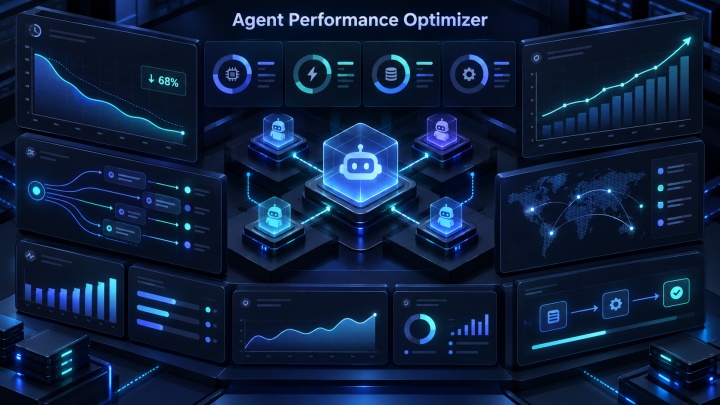
An agent performance optimizer analyzes and refines active AI system deployments. Focused on AI performance tuning, this role optimizes system prompts, retrieval pipelines, and model usage to increase accuracy, minimize latency, and reduce API token expenditure.
Priority responsibilities:
- Improving the accuracy and reliability of AI agents. Optimizers tune prompts, workflows, and reasoning chains, improve search quality in RAG systems, enhance the accuracy of multi-stage process planning and execution, minimize failure cycles, and improve consistency when performing repetitive tasks.
- Monitoring agent performance metrics. Specialists develop performance monitoring dashboards, define KPIs for autonomous systems, track metric changes, analyze system usage, and compare model versions.
- Prompt and workflow optimization. This role involves developing and configuring system prompts, refining reasoning chains, optimizing processes involving multiple agents, and optimizing tool selection and context management.
- Improving speed and cost efficiency. Optimizers focus on selecting suitable LLMs, optimizing token usage, reducing output costs, reducing latency, and other tasks necessary to achieve a balance between costs and agent performance.
- Conducting experiments and tests. Specialists regularly conduct various tests and experiments aimed at improving the performance of AI agents. They compare prompt variations, test baseline models, evaluate search strategies, analyze the results of AI interactions with users, and more.
Human-Agent Synergy Manager
A human-agent synergy manager designs and optimizes hybrid workflows centered on human-AI collaboration. Blending organizational psychology, workflow design, and change management, this role ensures seamless task delegation and effective oversight between human teams and autonomous agents.
Primary job responsibilities:
- Designing human-AI interaction. Managers design mechanisms for distributing tasks between humans and AI agents, develop hybrid workflows, and ensure a balance between AI automation and human oversight.
- AI agent orchestration. This position involves managing the operation of multiple AI systems. Agents are assigned workflows and business functions, their interactions are monitored, task delegation systems are created, and their compatibility is ensured.
- Human oversight and management. Synergy managers develop systems to verify the performance of autonomous systems, define approval checkpoints for AI decisions, monitor behavior for errors or unsafe results, maintain operational transparency, and ensure compliance with regulations and ethical standards.
- Personnel training and development. Specialists train employees to interact with AI systems, develop their skills in autonomous system management, and create practical AI application guides and onboarding programs for AI-enabled workflows.
Final Thoughts
The rise of agentic AI is redefining software engineering, process architecture, and the future of work. Building a career in this space requires moving beyond basic prompt engineering toward system architecture, workflow orchestration, and safety governance. As autonomous agents become core business assets, expertise in human-agent integration will be among the most valuable skill sets in tech.
Recommended reads: