How No-Code Automation Drives Growth for PR Agencies

Running a PR agency means dealing with a constant flow of information and communication. Every day, teams process client inquiries, receive briefs and revisions, approve texts, and update project statuses. At the same time, they assign tasks, track deadlines, and distribute workload across the team. In addition, agencies communicate with journalists, editors, media outlets, partners, and clients.
In day-to-day work, PR specialists prepare and approve press releases, plan media placements, conduct outreach to newsrooms, track published content, prepare reports for clients, and manage leads and projects. Some information lives in spreadsheets, some in task managers, and some in email inboxes and messengers.
When an agency is small, the team can manage these processes manually. But as the agency grows, manual work starts to slow things down: data gets duplicated, information is lost, and it becomes harder for the team to quickly understand the current stage of a project. At the same time, a significant part of these processes can be automated. This is where no-code automation platforms, such as ApiX-Drive, come into play.
Why No-Code Integration Matters for PR Agencies
PR agencies need to stay flexible and adapt quickly to changing workloads. At the same time, not every agency is ready to hire a developer, maintain an in-house IT team, or spend months building custom solutions.
The no-code approach solves this problem. It allows teams to set up automation on their own—without programming or technical expertise. PR professionals don’t need to understand code; they only need to understand the logic of their workflows.
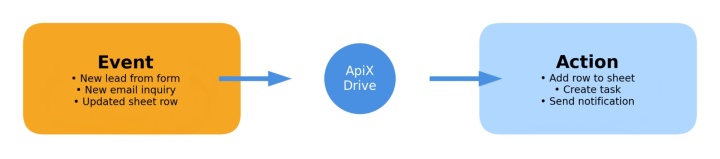
ApiX-Drive works on a simple “event → action” principle. When something happens in one system, the platform automatically transfers data to another. For example, when a new request comes in, the system immediately records it in a spreadsheet, creates a task for the team, and sends a notification to the responsible manager. The agency continues using familiar tools—forms, spreadsheets, email, and messengers—while connecting them into a single, consistent workflow.
Automating Data Collection and Processing
One of the most common challenges in PR is scattered data. Leads come from website forms, ad campaigns, email and messengers. A manager might log client requests in one place, track project statuses in another, and leave some information in conversations. Automation helps collect this data without losses or manual transfers.
In practice, many PR agencies use Google Sheets as a basic data store: they track leads, log client requests and mark project statuses in spreadsheets. It’s a familiar and clear tool, but it quickly becomes inefficient when you have to update data manually. No‑code automation allows you to link spreadsheets with other services. For example, every new row in Google Sheets can automatically create or update a contact in a communication system—without copy‑pasting or manual checks.
A basic lead‑automation scenario looks like this:
- A new inquiry comes from a form or an ad.
- The system automatically records the data in Google Sheets or a CRM.
- Creates a task for the team.
- Sends a notification to the manager via messenger.
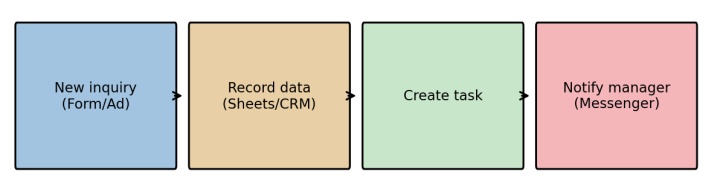
Such a flow solves several tasks at once: the system doesn’t lose data, doesn’t duplicate it, and always keeps it up to date. The team works from a single source of truth and doesn’t waste time on manual syncing. This lays the foundation for more complex processes—media planning, outreach and reporting.
Automation is particularly useful for leads from advertising channels. For instance, data from social‑media lead forms can go straight into a contact or email tool. A new request becomes part of the workflow immediately and doesn’t get “stuck” between services.
Automating Media Planning, Outreach and Content Work
The agency continues to use familiar tools—spreadsheets, email and messengers—but it links them into logical workflows. The team defines a clear structure for each process and scales it as the workload grows.
Media planning and data: Media planning remains one of the key processes in PR. In practice, PR specialists almost always manage media plans in spreadsheets. They list the outlets, topics, placement costs, expected reach, dates and publication statuses there.
PRNEWS.IO can serve as a data source that matters to PR specialists: the system shows site metrics, placement costs, topics and forecast reach. The PR specialist exports this information into spreadsheets and uses it further—planning campaigns, aligning media plans with the client, and preparing reports. You can automatically transfer data from spreadsheets to various services and applications, thus increasing the efficiency and speed of information processing.
Outreach and Follow-Up
Outreach in PR isn’t limited to paid placements. In classic public relations, a PR professional works with journalists’ contacts, sends pitches, tracks responses, and follows up when needed. This is where most losses happen: a journalist doesn’t reply, a manager forgets to follow up, or the status of the conversation stays only in someone’s head.
Automation helps structure this process.
A typical outreach and follow-up scenario looks like this:
- The PR professional adds a journalist’s contact to a spreadsheet or CRM.
- Records the pitch they’ve sent.
- The system waits a set amount of time and then creates a follow-up reminder.
- The manager gets the notification and returns to the conversation.

With this approach, the spreadsheet stops being just a list of contacts and starts acting as a trigger for further actions—such as notifications, reminders, and status updates.
PRNEWS.IO can also help here by covering a specific part of the process: paid placements. Instead of lengthy back-and-forths with editorial teams, the PR specialist orders a placement and receives the publication within clear timelines and budget. This simplifies media planning and makes the outcome more predictable, which is especially important when deadlines matter.
AI and Content Work
No‑code automation fits well with AI tools. PR agencies use them to analyze data, find topics and draft content. The model analyzes which topics produce the best reach and which formats work better. AI also helps draft press releases and articles, which the team then edits and approves.
It’s important that these scenarios run regularly rather than occasionally. Automation turns isolated experiments into a systematic way of working.
Internal Team Coordination
As an agency grows, internal coordination becomes a priority. The team manages multiple clients, works on dozens of publications and constantly updates project statuses. Without transparent processes, chaos can set in quickly.
Automation synchronizes the team. The system automatically creates tasks, updates statuses and sends notifications. The manager doesn’t have to manually check every project stage—that information is already recorded.
ApiX‑Drive as a Growth Engine for PR Agencies
No‑code automation in PR isn’t just a way to optimize routine tasks. It’s a strategic growth tool. When operational processes run automatically, an agency can scale without increasing the workload on its team.
ApiX‑Drive helps PR agencies link disparate processes into a single system: it collects data, supports lead management, simplifies media planning, helps organize outreach and keeps the team in sync. All this happens without code, complex integrations or extra costs.
As a result, the team spends less time on operational work and more on strategy and client results. That’s why no‑code platforms become genuine drivers of growth for modern PR businesses.
Integration setup examples:
- Smartsheet and Google Calendar Integration: Automatic Event Creation
- Webflow and Slack Integration: Setting Up Automatic Notifications
- Facebook and Airtable Integration: Automatic Transfer of New Leads
- Google Lead Form and Google Sheets Integration: Automatic Lead Transfer
- TikTok and Google Calendar Integration: Automatic Lead Transfer