Best Practices for Using SMS in Omnichannel Customer Communication

Customers today move effortlessly between channels. They might place an order on a website, receive updates on their phone, reach out on chat, and expect everything to feel connected. They don’t think in terms of “SMS” or “email”; they simply expect communication to be timely, relevant, and reliable. That’s the promise of omnichannel customer communication. And even with the rise of rich messaging apps and push notifications, SMS continues to play a crucial role in making omnichannel strategies actually work. When used correctly, SMS enhances customer experience. When used carelessly, it quickly becomes noise. This blog explores best practices for using SMS in omnichannel customer communication, with a focus on clarity, coordination, and customer trust.
Understanding Omnichannel Customer Communication
Omnichannel communication means delivering a consistent and connected experience across multiple messaging channels: SMS, WhatsApp, email, push notifications, in-app messages, and voice.
Unlike multichannel approaches, omnichannel strategies ensure:
- Messages are coordinated, not duplicated.
- Context is preserved across channels.
- Customers can move seamlessly between touchpoints.
Omnichannel communication focuses on the customer, not the channels. Its main task is to help businesses build consistent, more predictable, and convenient interactions with customers at all stages of their journey.
The key feature of the omnichannel approach is that all points of interaction with the customer work within a single, holistic ecosystem. Data related to customer requests, actions, and communication history is analyzed and used to ensure that each subsequent interaction with the customer feels appropriate and is a logical continuation of the previous one. As a result, the customer, who communicates with the company through different channels, receives a smooth and seamless experience that increases customer satisfaction.
Why SMS Still Matters in an Omnichannel Strategy
Despite newer channels, SMS remains one of the most dependable communication tools available to businesses.
Key reasons include:
- Extremely high open rates.
- Instant message delivery.
- No dependency on the internet or apps.
- Universal reach across devices and regions.
Because of these strengths, SMS is best suited for:
- OTP and authentication messages.
- Transaction and payment alerts.
- Order and delivery confirmations.
- Appointment reminders.
- Time-sensitive service updates.
In most omnichannel scenarios, SMS has the shortest path to the customer, so it is often chosen as the first signal or backup channel. In such cases, SMS can be a quick trigger that draws the customer's attention to the need to perform an urgent or important action or to review a message that has arrived in another channel.
Of course, using SMS in itself does not automatically guarantee high efficiency of this channel. To achieve the desired results, it is important to follow a number of proven best practices.
Best Practices for Using SMS in Omnichannel Communication
1. Choose SMS Use Cases Carefully
Not every message should be sent via SMS.
SMS is ideal for:
- Security-related notifications.
- Urgent updates.
- Messages that require immediate attention.
Long-form communication, onboarding flows, and promotional content are often better handled through email, in-app messaging, or rich chat channels.
2. Coordinate SMS With Other Messaging Channels
SMS delivers the most value when it’s part of a connected messaging flow.
Examples:
- Send OTP via SMS, then continue engagement on WhatsApp.
- Use SMS as a fallback if WhatsApp or push notifications fail.
- Trigger SMS reminders when emails remain unopened.
Omnichannel success comes from orchestration, not channel overload.
3. Be Intentional About Timing and Frequency
SMS demands attention, which means misuse is noticed immediately.
Best practices include:
- Respecting local time zones.
- Avoiding early-morning or late-night messages.
- Limiting message frequency.
- Using SMS only for high-value interaction.
4. Keep SMS Content Simple and Action-Oriented
SMS messages should be:
- Short and clear.
- Easy to understand at first glance.
- Focused on one purpose.
- Written in simple, global-friendly English.
5. Use Personalization Carefully
Personalization improves engagement when used thoughtfully.

- Automate the work of an online store or landing
- Empower through integration
- Don't spend money on programmers and integrators
- Save time by automating routine tasks
Effective personalization includes:
- Customer name.
- Order or appointment references.
- Contextual updates.
The goal is relevance, not overfamiliarity.
6. Prioritize Consent and Compliance
Consent is the foundation of responsible SMS communication.
Businesses should:
- Collect explicit opt-in where required.
- Clearly state the purpose of messages.
- Provide easy opt-out options.
- Follow regional SMS regulations.
7. Maintain Brand Consistency Across Channels
SMS should feel like it comes from the same brand as your:
- Emails.
- WhatsApp messages.
- App notifications.
- Support conversations.
Consistency builds trust.
8. Build Fallback and Failover Messaging Logic
Examples:
- Sending SMS if WhatsApp delivery fails.
- Triggering SMS when push notifications go unopened.
- Using SMS to confirm critical actions when email bounces.
SMS often becomes the safety net in omnichannel communication.
The Role of Messaging Providers in Omnichannel SMS Strategy
An effective SMS strategy depends not only on what you send but also on who delivers it.
Messaging providers are responsible for:
- Reliable global delivery.
- Carrier connectivity.
- Sender ID registration and compliance.
- Handling traffic spikes.
- Supporting fallback and routing logic.
In omnichannel environments, where SMS often serves as a backup channel for critical communication, delivery reliability directly impacts customer experience.
Businesses also benefit from messaging providers that offer easy integrations with existing tools and automation platforms. For example, D7 SMS is available on ApiX-Drive, allowing businesses to integrate SMS into their workflows without complex development effort. This makes it easier to trigger SMS messages from CRMs, marketing tools, support systems, or ad accounts as part of a unified omnichannel strategy.
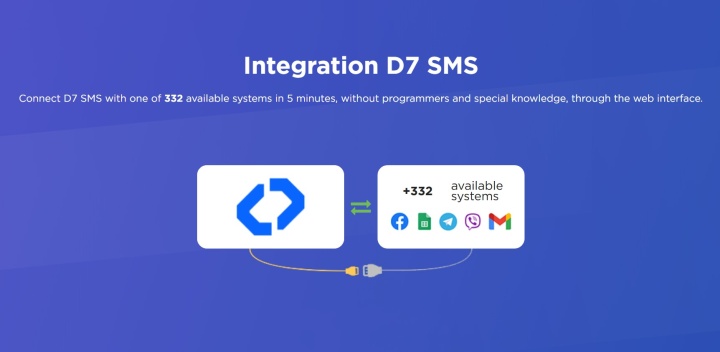
When SMS integrates smoothly with other systems, teams can focus more on customer experience and less on technical complexity.
Common Mistakes to Avoid
Even a perfectly designed omnichannel strategy can show unexpectedly low efficiency if you use SMS without a clear system and do not follow the rules. It should be borne in mind that any mistake is very noticeable in this channel, since messages reach the customer quickly and directly on the phone. If an unsuccessful message in the messenger can still be quickly edited or deleted before the client sees it, then this will not work with SMS — after delivery it is no longer possible to correct or recall it.
Problems often arise when SMS is used inconsistently, completely duplicates other channels, or has no specific purpose at all. In such cases, the messages not only lose their usefulness for the customer but also become intrusive. As a result, trust in the brand rapidly declines and a negative attitude towards it is formed.
The most common mistakes:
- Overusing SMS for promotions.
- Sending messages without consent.
- Ignoring timing and frequency rules.
- Treating SMS as a standalone channel.
- Using unclear or unbranded sender IDs.
Real-World Omnichannel SMS Use Cases
SMS is part of a holistic ecosystem of customer communication, so the use of this channel is not limited to industries or spheres. It is usually used when there is a need to transmit urgent messages that require a prompt response from the customer. In combination with other communication channels, SMS helps to minimize delays in interaction, quickly provide customers with information about important updates, and maintain long-term contact with them.
Typical cases of SMS implementation in omnichannel strategies:
- E-commerce: Order confirmations, delivery alerts.
- Banking and fintech: OTP verification, transaction alerts.
- Healthcare: Appointment reminders, test notifications.
- Logistics: Shipment updates, delivery confirmations.
- Customer support: Ticket updates and resolution alerts.
Measuring SMS Success in an Omnichannel Strategy
Timely and correct assessment of the effectiveness of the SMS channel allows you to find out how well it fits into the communication strategy and what impact it has on customers. It is important not only to count the number of delivered and undelivered messages but also to analyze the results of SMS interaction with other channels and changes in communication results.
It is worth tracking the following indicators:
- Successful delivery rate.
- Interaction or response signals.
- Impact on conversion.
- Reducing churn through backup messages.
- Improving customer satisfaction.
Periodic analysis of metrics allows you to optimize the use of the SMS channel in a timely manner, make adjustments to the frequency of sending messages, and see when and where SMS is most useful. As part of the implementation of an omnichannel approach, it also provides an understanding of when SMS is better to be designated as the primary channel and when as a backup.
Final Thoughts
Due to its versatility, reliability, and high speed, SMS still remains a key component of an omnichannel customer communication strategy, despite the emergence of new communication tools. This channel allows you to quickly provide urgent information and maintain constant contact with the customer — while the flow of messages is clearly coordinated with other channels, ensuring the integrity of the communication ecosystem.
By using SMS in pre-thought-out scenarios, with prior customer consent, and in coordination with other channels, you increase customer trust in your brand. Then the channel turns from a simple message delivery tool into an important part of the customer experience, helping the company stay in touch with its customers even in extremely difficult situations.