
From SEO to GEO: How AI is Redefining Search Optimization

The emergence of generative artificial intelligence has radically transformed a number of industries and sectors. One of these is online information search, where traditional search engine optimization (SEO) has been replaced by a new standard — GEO. In this article, we'll explain what GEO is, how generative search engines work, and how they differ from traditional search engines. Learn how this innovation has changed the approach to internet search and website optimization. You'll also receive up-to-date recommendations to help you intelligently adapt your web content to new AI algorithms.
The Evolution from SEO to GEO
For decades, search engine optimization (SEO) has been a key tool in online marketing. Companies meticulously optimized content and implemented link-building strategies to improve their website rankings in organic search results from popular search engines (primarily Google).
SEO standards have changed regularly, but its core concept has been fundamentally transformed with the rise of Gen AI in 2022. Artificial intelligence has gradually begun to be integrated into a wide variety of systems, both existing and completely new.
More and more users have begun to use AI chatbots and other services to quickly search for information online, abandoning traditional browsing through Google. The demand for AI technologies has led to a radical transformation in this industry, with generative engine optimization (GEO) replacing SEO.
GEO is much more than just another internet search trend. It essentially represents a complete overhaul of its logic and principles. Instead of optimizing websites and their content to search engine standards, businesses are now forced to optimize them for new AI systems (ChatGPT, Gemini, Perplexity AI, Claude, Grok, etc.).
However, treating GEO and SEO as separate entities is misleading — these aren't competing trends, but rather different generations of internet search standards. Traditional search engines (Google, Bing, etc.) have long since integrated AI models into their algorithms, thereby embracing these new standards.
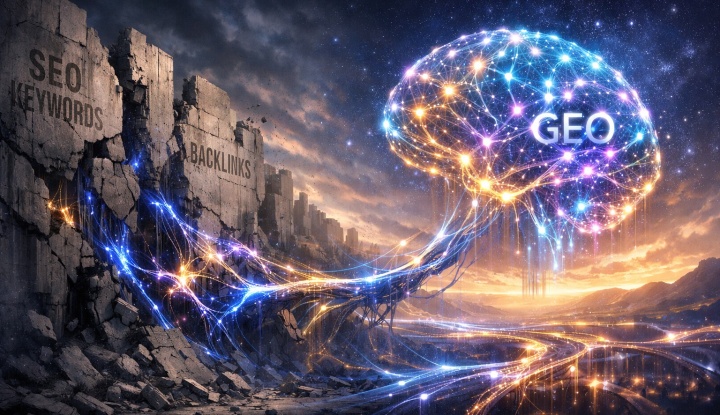
This paradigm shift creates new demands on webmasters, optimizers, marketers, and other professionals responsible for promoting brands and their products online. They must master advanced tools and implement new content optimization strategies to make it visible and understandable to artificial intelligence.
What Is Generative Engine Optimization
GEO (generative engine optimization) is a modern digital strategy designed to optimize content on websites and other web resources for generative AI systems (ChatGPT, Gemini, Perplexity, Claude, Grok, Mistral, etc.).
The growing popularity of GenAI services as tools for online information search is changing how people find content on the internet. As a result, content providers are adapting their materials not only to audience interests and traditional search engine requirements but also to new GEO standards.
GEO can improve content visibility in search results generated by artificial intelligence algorithms based on user queries. Like SEO, this helps businesses increase their online visibility, drive traffic to their websites and social media, and attract potential customers to their brands and products.
The key differences between GEO and SEO include the following factors:
- Response generation. AI search optimization increases the likelihood that responses will cite accurate and relevant information obtained from the company's official resources or other content providers.
- Content structure. Content optimization for GEO includes specific formatting rules that allow AI systems to find and process it more quickly. Algorithms better process content containing images, videos, infographics, quotes, and short blocks of text.
- Performance tracking. GEO uses metrics such as citation frequency and referral traffic volumes from AI services to evaluate the effectiveness of strategies.
- User interaction. Search engine traffic to a website is key for SEO. In the case of GEO, this factor is less important, as users often interact with content directly in the AI system interface, without visiting the provider's website.
- Information synthesis. SEO is focused on improving the rankings of specific websites or pages. GEO helps improve the visibility of a brand or product as a whole, as AI algorithms always collect and process content from several different sources (websites, social media, etc.).
How AI-Powered Search Changes Content Discovery
The emergence of multifunctional AI services has radically changed the principles of online information search. The workflow of generative engines differs significantly from the procedures previously performed by search robots. It is characterized by the following steps:
- Context-aware semantic search.
- Ranking of sources.
- Personalization of results.
Here's what happens at each stage.
Context-Aware Semantic Search
AI chatbots and other generative AI services search and process data based on user intent, source quality, and other semantic parameters. This distinguishes them from traditional search robots, which simply match keywords in queries with web page content.
Therefore, one of the key tasks of GEO is to ensure AI content visibility by providing algorithms with the necessary context. For neural networks, keyword density is less critical than a whole range of factors related not only to the content but also to the input data (interaction history, emotional tone of the query, user location, etc.).
Source Ranking
When processing queries, AI algorithms collect and analyze information from a range of sources, using both their own datasets and online resources. They also perform a comprehensive ranking of search results, evaluating selected content on websites and social media according to specific criteria.
According to research by Ahrefs, about 72% of citations in AI-generated reviews come from sites in the top 10 search results for relevant queries.
Another crucial factor is the AI's ability to learn independently. It continuously updates its ranking criteria through ongoing analysis of information. Neural networks rank content based on its popularity with users (views, external links, citations), relevance (publication date), formatting (lists, tables, images, videos), and other indicators of source reliability.
Personalization of Results
At the final stage of the internet search process, AI algorithms personalize the collected data, adapting it to a specific query. This allows users to independently determine the volume and structure of the information they receive in ChatGPT search results or other AI systems.
When personalizing results, artificial intelligence takes into account the user's interaction history, location, and other personal information. It also adapts the collected materials to the requirements of the request (for example, regarding their formatting). By default, the AI most often structures the data into a short digest with key points on the given topic.
Core GEO Strategies for Content Creators and Businesses

Here are key recommendations for developing a GEO content strategy. By implementing these strategies, you can improve the visibility and discoverability of your content by popular AI systems.
- Prioritize clarity and informativeness. Web content written in a natural, conversational style is better perceived by AI algorithms. When preparing texts, avoid complex concepts and specialized terms, focusing on informational content and relevance. The clearer and more accessible your content is, the faster it will be found and processed by AI.
- Structure your content effectively. Proper content structure helps AI quickly analyze its context and relevance to the query. For GEO, format text with subheadings, paragraphs, lists, and quotes, add images and other media content, and incorporate keywords and schema markup.
- Ensure content credibility and authority. High-quality content is one of the most important factors for successful optimization for generative AI. Include only verified and fact-based information, links to reliable sources, and quotes from authoritative experts. Ensure your content adheres to the E-E-A-T (Experience, Expertise, Authority, and Trustworthiness) principles and is highly unique.
- Analyze AI Overviews. Regularly monitor your content rankings and overall brand mentions for keywords in Google's AI Overviews.
The Future of Search Optimization in the AI Era
Understanding emerging trends in AI search will help authors and businesses effectively adapt their content to new standards. This will make it more visible and attractive to neural networks used in generative engine optimization.
Industry experts predict that organic traffic from traditional search engines will continue to decline. The main reason for this is the growing popularity of zero-click searches — users are increasingly finding answers to their queries through AI services or Google AI Overviews without visiting websites.
Another promising trend in AI search is the transformation of AI agents into autonomous web users. Autonomous programs are already actively searching for information online. In the future, they will be able to perform many more online activities, such as making purchases, booking appointments, processing invoices, and more.
Finally, it's highly likely that paid content placement in AI search results will become widely available soon. For example, since the fall of 2024, mobile users in the US have been seeing ads in Google AI Overviews. It's possible that paid content placement services will appear in other AI services in 2026.